
In full
Most schools that have tried virtual reality have a story that ends the same way. The headsets arrived, the first lesson was thrilling, and within a term the box was on a shelf in the resource room. The technology worked. It just stopped being used. If you want to understand whether VR belongs in a classroom, that is the more useful question: not whether it can impress for a morning, but whether it earns its place for a year.
What a headset does that a textbook cannot
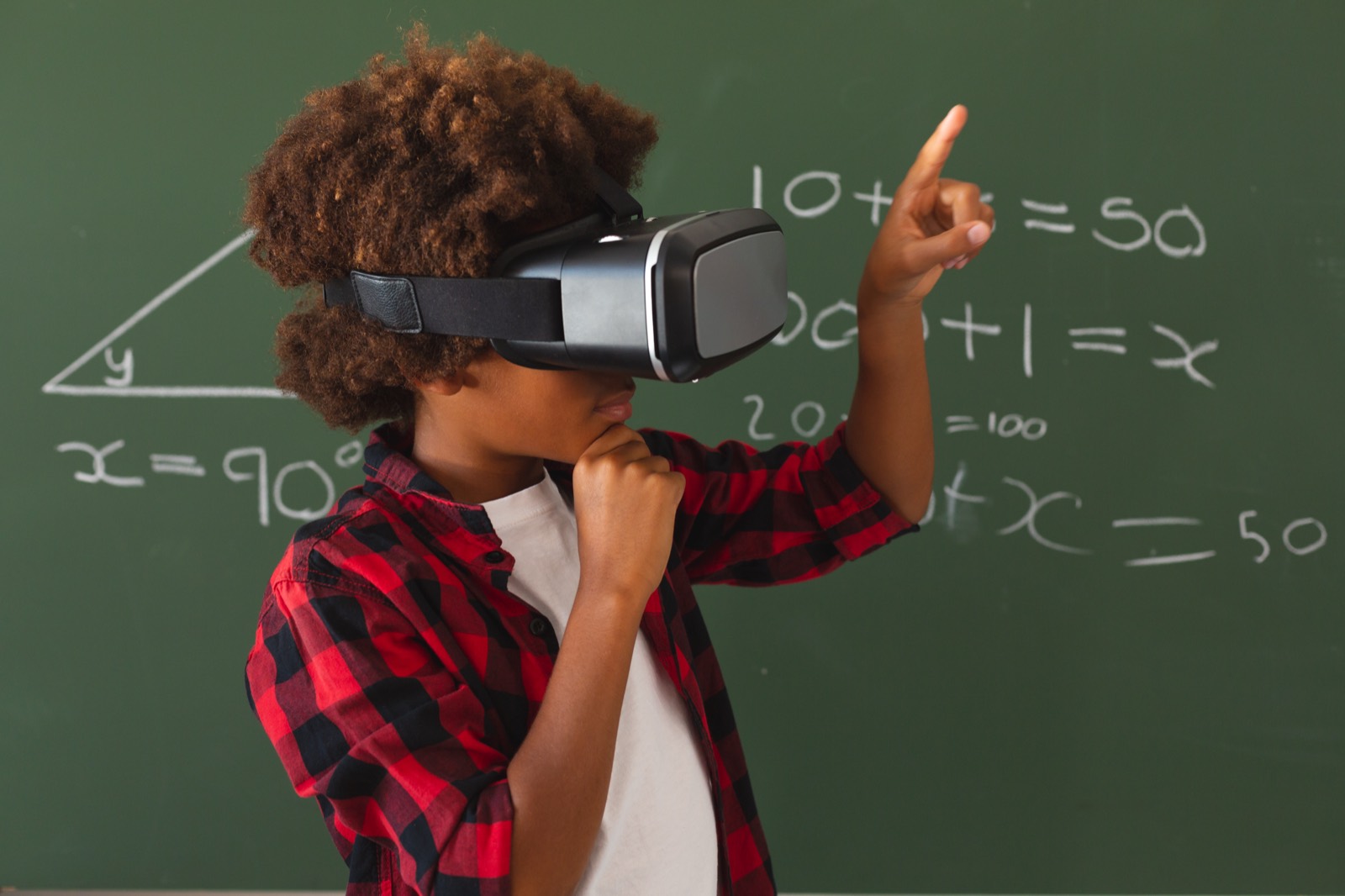
The honest case for VR rests on one thing: presence. A diagram of a Roman forum is a picture of a place. In a headset, the pupil is standing in it. That shift from looking at something to being inside it is what the research keeps pointing to. For the right material, immersion holds attention and improves how much a child remembers afterwards. It is most convincing where the subject is spatial, experiential, or simply out of reach.
- The field trip you could never run. The inside of a volcano, the surface of Mars, a cell dividing, a heart beating. Places that are impossible, dangerous, or too expensive to visit.
- Spatial subjects. Geometry, anatomy, geography, architecture, anything a child understands better by moving around it than by reading about it.
- Coding and robotics. Pupils build and test in a simulation, without a room full of physical kit to buy, break, and maintain.
- Reluctant and different learners. A child who has switched off from the page will often switch back on in a headset. For some pupils that is the whole point.
A headset that needs ten minutes of setup before every lesson is a headset that gets used twice.
Where it does not belong
VR is not a better way to do everything, and pretending otherwise is how schools end up disappointed. Rote practice, most reading, anything a worksheet already handles cleanly: a headset adds cost and friction without adding learning. The test is simple and worth applying before any purchase: does immersion teach this better, or is it just novelty bolted onto a lesson that was fine already? If it is the second, the headset will be in the cupboard by half-term.
The real reason it fails is never the teaching
When a VR programme dies, look at the cause and it is almost always operational, not educational. The headsets are flat because nobody owns charging them. The content is a year out of date because updating it was somebody's spare-time job and they left. A pupil reached something they should not have, so the kit got quietly retired. Above all, the teacher who was keen ran out of time to be the unpaid IT department for six devices. None of that is a problem with virtual reality. It is a problem with who runs it.
What changes when it is managed properly
The version that survives looks different from day one. The headsets arrive configured and locked to curated, age-appropriate content: no open browsing, no app store, no surprises. Charging, updates, repairs, and safeguarding controls are somebody's actual job, not a favour. The lessons are mapped to the curriculum, so the technology is measured against learning, not against how impressive the demo was. And it starts small: one classroom, real lessons, a term to see whether it earns its keep, before anyone signs off a rollout.
Put that way, the decision a school is really making is not "should we buy VR". It is "do we want to run a fleet of devices, or do we want the lessons without the burden of running them". Those are very different commitments, and confusing the two is what fills the cupboard.
Virtual reality earns its place in a classroom when the subject is spatial or out of reach, the content is tied to the curriculum, and someone other than the teacher runs the devices. It gathers dust when it is bought as hardware and left as the teacher's problem. The technology was never the hard part. The management is.
This is the model behind our Immersive Classrooms service: the school gets the lesson, we run everything underneath it.